Saturday, April 05, 2008

Volunteers Yet Again


One of the more fascination ploys of the upper classes is the volunteer “move.” That is, no matter how much they want something, when they get it, it was a result of their charitable instincts. Once I described asking a committee of law professors in a meeting who “wanted” to go to a out of town meeting. Not one person “wanted to.” Within days every person on the committee contacted me privately to say he or she was “willing to go.” And then when I announced I had too many people who wanted to go, I was quickly corrected. Yet each one insisted on going.

It is pervasive. I was in a meeting a few days ago when one faculty member described how he did not want to hold an administrative post, a position now held by that person with an iron grip with no signs of change. And, a past Interim Dean was described as being forced to be Interim dean and, as you would expect, the faculty nearly had to use a fork lift to get him out of the office.

My favorite recent one involves the director of a set of programs that involve traveling to interesting places. When I asked to go, I was told that he had already “volunteered” to do it.

What’s up with this. Do these people learn this in law school or at their parents’ knees? It is all part of life is a negotiation and you never appear to want something because, if you get it, you should not ask for more. And privileged people always want more.

Tuesday, April 01, 2008

Ways to be a Big Shot


I guess this is for new law professors because all the veterans know how to frame things to may themselves look more important. So

1. The third level law journal at Harvard has agreed to publish your article: From here after you refer to this as "My article at Harvard."

2. One of the second tier law schools near or in Boston invites you to give a talk. From here after you refer to this as: "I will be in Cambridge [be sure to book a room there] giving a talk."

3. You get a brochure about a opening for dean at a law school. From here after you refer to this as: "I am talking to the University of ________, with respect to an administrative post."

4. Your parents live in Dade City Florida. You visit them once a month. From this point forward, "I'll be in D.C. for a few days."

5. At a huge cocktail party you are in the receiving line and meet the governor. From this point forward: "I was just taking to Charlie about that problem the other night."

6. You spot Al Sharpton in a coffee shop where you are having breakfast. From now on: "I was having breakfast with Al just the other day."

Saturday, March 29, 2008

Your Poor Baby!!

Yes, I practically weeping. And what about? It's those working conditions for Law Professors. No I am not talking about the secretaries who come to work everyday at 8 and leave at 5 and must use sick leave to take a sick child to the doctor.
I am talking about law professors who are so very important that their teaching schedules have to be just so or perhaps they "just cannot take it."
Think about it:
1. Some need Friday off because they go to so many important conferences where there are many other important people.
2. Some can't teach after 3 because that means hiring a care taker for the kids. By the way, who is taking care of the secretary's kids?
3. Some can't be on campus all that much because they live so very far away.
4. Some can't teach early in the morning because that would mean driving in when traffic is at a peak.
5. Some can't possibly teach more than 2 days a week because they have so much research to do. Poor things!!
6. Some just can't be in class more than 9 hours a week because, again, it would get in the way of all that important research.
I am so sad.

Saturday, March 22, 2008

What's a Dean To Do?


When I first started writing for Moneylaw and for this blog I was very hard on deans. In part as a result of comments I have softened my view and come to realize what a pickle deans are in.

I am not thinking here about a top 10 or 15 school but a School ranked lower, let’s say 50th with little hope of moving to the 30s and unlikely to drop to the 60s. What does a School like that want from a new or old dean? For example, do the faculty want the dean to move the School to a higher ranking? Probably yes if it means doing so by increasing placement rates and entering GPAs or LSATs. Probably no if it means raising bar passage rates by revising the curriculum or increasing national prestige through increased scholarship. What’s the difference? That’s easy. What 50 wants is 39 while making 50 effort.

The dean could hire more productive people. That might work but, unless there is a huge number of retirements or resignations, the dean cannot hire enough at the margin to push 50 to 39. The dean could pay more to more productive people. But, when you think about it, deans do not have much money to play with and it takes more than a few more productive people to move a faculty up. Plus, if they are productive enough to make a difference, they are likely to be targets of other schools. What’s worse is that the group the dean really has to worry about is the 75-90% who are not leaving, ever. Those are the people who must be kept happy if the dean is to keep his or her job. Push too hard and the dean may be looking for another deanship. Thus, to avoid trouble the dean is well advised not to make too many distinctions.

Back to a version of the original question: How do you determine whether the dean at 50 has been successful or not? It cannot possibly be by keeping faculty 50 happy. That’s like telling the Devil Rays manager not to worry about a losing record as long as the players are happy. Moving the school’s ranking up by somehow making the faculty more productive is not in the cards. If that could happen, they would already be more productive. Perhaps it is to move the ranking up with smoke and mirrors. This means all kind of decanal glossies and advertising five-page articles as “meaningful” scholarship. Maybe that is the answer: The dean of 50 keeps his or her job by being a magician who attempts to make everyone, including the faculty at 50, appear to be something it is not. Poof!

Saturday, March 08, 2008

Privileged Hats

As a law professor, one of the many things I cannot figure out is whether we are management, workers, or professionals. It seems we are all three. Supposedly in the context of governance we determine rules about the operation of a law school. In this role we make decisions ranging from courses offered to our own work loads. As workers we complain about management and policies unilaterally made without consultation. We see ourselves as working for a specific school. As professionals we have primary allegiance to the role of “law professor.” We can move from school to school and fit right in fairly seamlessly. Our focus is on profession-affecting developments.

Here is an example of the different perspectives. Two professors have offers to leave for other schools. One, the professional, says to the administration. “What package can you offer me to get me to stay?” “Me” is the operative word here. The other professor says “I’d like to stay but I would like the School to be a better place. Please tell me what it will be like here in the future.”

Here is another one. A huge meeting is called to discuss modernizing the curriculum. The discussion is about what the School might do if resources were available. See the division here? Now professors take on the worker mentality and the focus is on what could be done if management did its job. No one notes that every proposal is possible without additional funding if faculty would agree to work a bit harder and give up some activities that may have run their course in terms of effectiveness. In this context, faculty have no ownership in the operation; they are hired hands.

On the other hand, when an administration begins to take the lead and actually treat professors like workers, their role shifts. For example, an administration, after careful study, designs a fall schedule that includes all appropriate courses and places them in slots that minimize overlaps. Professors are notified with due consideration of their teaching specialties. The Administration quickly learns that this is unacceptable. Professor X says, “But it is my turn to teach Advanced Rigatoni.” And Professor Y, “I told you I do not want to teach in the first year.” And Professor Z, “I only teach two days a week.” In unison “We were not consulted!”

The problem is not that professors wear three hats. That seems unavoidable. The problem is how quickly so many switch hats when it suits them. Those less privileged have only one hat -- two at the most.

Monday, March 03, 2008

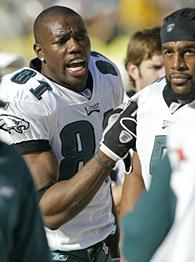
T.O., Law School Stars, and the Team

Over on Moneylaw, Jim Chen has noted the importance of playing for the team as opposed to oneself. He is writing about the Louisville basketball team but suggests the question can be applied to other university units. No doubt, he is thinking about law schools.

When it comes to a law school, is it possible that trying to rack up individual statistics detracts from the success of the team? Before thinking about this, one other factor should be noted. If players are too self-serving and the team suffers, the team loses. If the team loses enough, the coach is fired. Consequently, there is a control. A player who tries to run up his or her score by taking the shot and not passing to an open teammate will be benched.

In the context of law schools there are, therefore, two issues. How do we know when a law professor is detracting from the team and is the dean comparable to a coach who can control this problem?

Running up individual stats for a law professor may mean publication after publication -- lines on a resume -- without any real consequence. This means being on the "take" for every 10 page symposium opportunity, accepting every opportunity to speak even if it has all been said before, patronizing the students to inflate teaching evaluations and so on. In the individual race, all of these things look good and enhance the image of the individual especially to fellow self-promoters who want to legitimize these activities. Much of this activity is "froth" that is unrelated to the actual overall quality of the team's effort.
Deans have a choice. They can facilitate this process or take a closer look at what is good for the team and, thus, the school. Specifically, a dean can be a counter -- how may times has your name appeared on an article, how many talks did you give -- and ignore actually "nose to the grindstone" efforts. To this dean, a 5 page symposium piece is the same as a 60 page article. That type of dean is a disaster for the team. By encouraging individual stats the nature of the game is set. Competition among team members means more wastefulness. Or the dean may choose to put some faculty on the bench by indicating what is best for the team. This means not counting but actual attention to depth. For example, is the work original? Does it represent painstaking research? Does the work represent a new direction for the faculty member or another safe effort?
Finding a losing law school team often means finding a coach who does not know the difference between running up individual stats and winning.

Thursday, February 28, 2008

Dylan: Is there A Way Out Of Here


"There must be some way out of here," said the joker to the thief,
"There's too much confusion, I can't get no relief.
Businessmen, they drink my wine, plowmen dig my earth,
None of them along the line know what any of it is worth."
B. Dylan


No, I do not mean UF where I teach and have what I think is the second best job in the world -- reading, writing and talking about interesting things.

I mean the confusion of legal education. Think about it.

Those wanting to improve teaching rail against the Socratic Method. Problem: No one uses it.

Law Professors want to be regarded as academics but have become sales reps for themselves and rarely search for answers. Instead, consistent with their training, they start with the answer and research in order to prove they are right.

Schools are torn between making legal education widely available but have their national rankings depend on the homogeneity of their student bodies.

Appointments Committees talk about diversity but hire nearly exclusively from elitist school even though there is no relationship between productivity of any kind and credentials. When push comes to shove the real questions is: Will this person add to my comfort level.

Law Professors fight for tenure and waste it by being the ultimate conformists in their research, positions, and well . . . everything else.

Dean's operate schools to please faculty while the actual stakeholders -- students and taxpayers -- are largely ignored.

Law Professors talk about the rule of law and then use all the tricks of the adversarial trade -- omissions, half-truths, ambiguous words -- to avoid the rule of law. The often live by a perversion of the saying "Do not do anything you would not want reported in the New York Times" Instead it has become, "Don't write anything down that you would not in the New York Times."

Think of what legal education could be like. You cannot get there from here. Sorry Bob!

Friday, February 22, 2008

The Dean Thing

I have from time to time written about law school deaning as have Jim Chen and Nancy Rapoport over on moneylaw. When they do it is with a perspective I cannot have. There are things I just do not “get.” In fact, I have four questions and an observation.

Questions 1. Who decides who is an expert on deaning?

Lately there have been books and symposia on deaning. Does just any dean get to participate? Is it like symposia in other fields where someone calls up a bunch of pals whether or not they have anything to say? For example, when I read one of these articles or book chapters they are usually written by a dean at a so-so school which did not distinguish itself during the writer’s tenure there. So, who is qualified to write about effective deaning? Just anyone?

Question 2. Am I imagining it or does Jim Chen seem like the opposite of most deans?

I mean he says what he means, announces his values up front and says he will work for those goals. If this type of behavior will not cut short his tenure as dean, why are other deans so afraid to say these types of things? Or course maybe they do not hold the same values or any values other than maintaining their jobs. That is scarier than just being silent.

Question 3. Can a Principled Person be a Dean for very Long?

When I observe deans closely, and I have only been able to do that a few times, there seem to be strategies for keeping the job. These strategies have little to do with the welfare of the School or students. Here are a few:

1. Do not come even close to doing anything that might remotely mean you could be called racist or sexist. The issue is not whether you are racist or sexist but do you make any decision that opens you to that charge. I have seen too many decanal candidates get passed over on the basis of rumors, murmurs or idle chit-chat dealing with race and gender.

2. Reward those who kiss your behind. Why not? The only people a dean cannot afford to loose and keep his or her job are the butt kissers. Every other person is expendable.

3. Reward the self-promotional. So what if Professor X writes 4 good articles and 17 short pieces in symposia or Professor Y takes 3 articles for which he was rewarded 5 years ago and turns them into a new book or Professor Z has written variations on the same topic of ten years. Numbers, not quality, good scholarship or originality fill decanal glossies. University presidents do not know the difference.

4. Always appease the biggest voting block. So what if you agree with Professor X and believe he or she is right. The critical question for the dean is how many people also agree with professor X.

5. Keep former associate deans happy. Once they go back to the faculty they can be appointed to important committees and given other assignments. It’s like having two layers of associate deans – current and those that act as though they still are working on behalf of the administration.

Is this unfair to deans? Almost certainly it is to some. In addition, to the extent these strategies exist it is result of the bizarre allocation of power within law schools.

This leads to question 4. Why be a dean if it requires any of the above strategies to keep the job?

Wednesday, February 20, 2008

"I am SO mad" and Efficiency

That line appears in a children's book I must have read to my own kids a few thousand times. Like every other parent I know I would try to vary it. Sometimes I read the title, author and all publication information including the ISBN. Other times I just added things like "I am so mad [I just got my hankie caught in a weasel's woofer.]

Now it is coming back. I think it was a book that featured the "little critters." Their chests were pumped up and their little arms straight down and fists clenched. BOY they were really mad!

At my law school we have had an nasty incident. Someone who may or may not be a student here (I don't know since I avoid the gossips) wrote a blog that most people (including every single person I know) will think tasteless and cruel. I will not give you the site because I'd prefer not to be someone who aids in this. Plus, I do not know it.

Now remember, every person I know and I think have ever known would be put off and even angered by this blog. I'd go a step further. I think every person every law professor knows would find the blog offensive at some level.

But that's my point. If everyone everyone knows would find it offensive what kind of courage, thinking, or risk is involved in all the complaining emails that have bounced around my school and others. I mean, where are these heros when there is some risk and actual controversy?

It's just way too predictable. Its' like pushing buttons on a panel. Push the right one and 15 people pipe up. Push another one and zero pipe up. In fact, on my campus there was another speech issue and the targets were a less sympathetic group than the target of the blog I have described and I think there was one person on the faculty who spoke up.

I've got an idea. Just to be efficient about it, on every email where you have your phone number or maybe just on your business card or tattooed to your arm have this:

"If anyone has said something racist, sexist or hateful about (here you add what ever you want -- environmentalists, vegans, Federalist society members, Republicans, Latinos, pizza tossers) whether or not I know about it, I am SO mad and I want someone else to do something about it."

Now you never have to worry about missing a chance to chime in and you yourself never take a risk or make a sacrifice. In the alternative one could decide not do this because, as I said, no one reading this blog or any other blog by a law professor and no one any of those people know do not already agree. This would leave you the time to think about actually taking a risk someday.

Saturday, February 16, 2008

Doing Chen Ups

Most people reading this blog get here via Moneylaw. If you have not read Jim Chen's latest post over there please do. There are two aspects of Jim's post that are important. One is his general message. As a former construction laboror and someone who pays attention to the background of his colleagues, I agree that you cannot fully appreciate a law teaching job and treat it as the privilege it is unless you have worked at the other end of the spectrum. I have written before that I think law schools would be well advised to hire people who have experience the other side of the socioeconomic line. I have nothing empirical on this but it would be interesting to study. The other part of this general point -- althought not made by Jim -- is the expectation those who have not worked hard expect those who are working hard to pay for their life time jobs of leisure. I am talking about the belief that there is justice in asking the convenience store clerk, secretary, tire shop worker, or bus boy to contribute to a lardass law professor's salary. One thing I have discovered in the world of law professors is an inability to feel shame.

The second aspect of Jim's post is not the message itself but his willingness to state his values and to let it be known whose side he is on. I have not worked at a law school with a dean that comes close to this. Evidently the prevailing "best practice" is to say nothing and certainly not to state what one's expecations are (of course this assumes there are expectations). Most deans seem to hide. Jim does not. What a breath of fresh air!!

Tuesday, February 12, 2008

The Tenured Life, Part 5: Complacency and Blaming the Students

One thing the tenure life breeds is complacency. There is one test that determines most of the decisions that may people make: what does this mean for me?

In two articles by Robert Lloyd, both of which are now over ten years old, he captures the idea of going with the flow. The title of one article "Hard Law Firms and Soft Law Schools," 83 N.C.L.Rev. 667 tells the story. Law schools are soft, teachers are not rigorous, they teach "soft courses." In a wonderful passage found in the other article he writes in reference to higher and higher grading curves, "When it reaches A+ there will be nothing left to give, and faculty will have to find new ways to ingratiate themselves. " 45 J. Leg. Ed. 551. Actually legal education, although not arriving at the A+ curve, has found out a way to give something new. When grades can't go any higher, the only thing to do is to expect less in class. When you have life-time employment no matter what you do, teaching (I mean actually teaching) less becomes easy.

And teaching less seems to be generally accepted. One colleague in a committee meeting noted that students 1) do not read and follow directions, 2) do not carefully read fact patterns 3) merely state the law without applying it to the facts (this is a big one, they seem to not understand what legal analysis is or why the facts are important) 4) fail to spot large issues. Not a single person in the meeting disagreed. And yet, many of these things are what law teachers are supposed to be teaching. No one suggested the problem actually begins with what takes place in the classroom.

The topic of teaching rigor is evidently off limits. As far as I know, nothing came of Robert Lloyd's warnings 12 years ago. In my own school, and I am willing to bet 90% of other law schools, conversations about rigor have not taken place and I doubt can take place. Call it a lack of leadership, complacency, or whatever but students will only learn what they are taught.

Tuesday, February 05, 2008

The Tenured Life, Part 4: Anti-intellectualism

As discussed so far, the the tenure life can mean rewards for poor teaching, less writing, and small ideas. It aslo leads to anti intellectualism. What do I mean by anti intellectual or intellectual? I have no idea if this is an official definition but for me it means that all ideas are explored, all questions asked, and the answers respected. I do not mean they become a guides to life but they are faced up to rather than discounted. All of this takes place even if it is morally and socially uncomfortable. And, principally an intellectual is not only interested in questions and answers that are self-referential.

Anti intellectualism may exist in all fields but in law it is particularly widespread. If ask what their specialities many law professors answer not with an topic but with the name of a, generally well-intented, political movement -- race, women's rights, environmental law, law and economics, ADR. How can these be areas of "scholarship" when nearly everyone is preaching to the choir, one must hold certain beliefs to be part of the research circle, and the goals lean more toward the promotion of ideas as opposed to their analysis? The literature in these "fields" reads more like position papers than the work of open minded researchers. In all of these areas some answers are unacceptable and any question that would lead to one of these answers is not asked. In the world of legal research a statement can be supported by citing the fact that someone else said it. It really does not matter as long as it was in print somewhere.

How is this a product of tenure? Tenure allows individual to persue self-referential research goals. A tenured professor has freedom and that generally means ignoring all interests other than self-interest.

I am indebted to one of the very few true intellectuals I know for showing me this from Noam Chomsky: "The professional guild structure in the social sciences, I think, has often served as a marvelous device for protecting them from insight and understanding, for filtering out people who raise unacceptable questions, for limiting reseach -- not by force, but by all sorts of more subtle means -- to questions that are not threatening."

Noam, take a look at legal research!

Wednesday, January 30, 2008

The Tenured Life, Part 3: Wasting It

In the last post on this topic I discussed faculty who fake it while untenured and run out of steam shortly thereafter. It is a huge cost to the public in two ways. First is being locked into paying a lifetime annuity with a low return. The other is the opportunity cost. For every non producer who is locked in, there is possibly productive person a school cannot hire.

Tenure is also wasted on another way. Tenure is granted on the basis of a very small sample of work. Still, those with tenure are given the freedom to take risks in research. Reading about a topic an finding there is nothing to say would be fine. Or working through a theory that turns out not to catch on or which is subject to flaws would also be risk free. Tenure is supposed to lead to big thoughts, deep thinking, taking risks, and at least once in awhile writing something provocation. People who do anything else are wasting tenure.

That idea of the tenure professor has given way to a race to fill resume lines. Law professors (and maybe others, I do not know) have gravitated to the quick fix – short symposium articles in which they repeat something they have already said and preaching to the choir in the process, casebooks, descriptive hornbook-type efforts. Many if not most law professor books that are not purely descriptive or casebooks, are recycled old articles. The point is even many people are “productive” in a quantitative sense are not really productive in the way that tenure would permit. Tenure is wasted squandered by these people.

I am hard pressed to understand the new emphasis on numbers of line on a resume. Deans typically have little money to spread around. Movement from school to school is rare and even more rarely based on article churning. One possibility is that faculty do not trust administrators to appreciate risk taking and quality. They do trust the same administrators to be able to count and this leads to the assembly line mentality.

Friday, January 25, 2008

The Tenured Life, Part 2: Prodigal writing

In the last post I described how poor teaching is tolerated in the tenured life and how there are incentives not to be an effective teacher. Scholarship is a little different. I am already on record saying that the scholarship requirement for law professors is probably overdone. 7200 articles a year is far more than necessary to express every original or useful thought all law professors combined have to offer.

Still every law professor I have known has made an implicit promise to carry on a research program. It was part of the exchange when he or she was promised life time employments. It has been shown that law professors generally write less once they get tenure. Some stop writing completely and do not make an effort to offset this through extra teaching.

Does it make a difference? It's unlikely. This faculty member may or may not be viewed as having fallen from grace. This all depends on whether he or she is politically useful to the administration or one faculty group or another. Being a good political ally will make up for massive levels of underachievement. Politics and decanl job security outweigh individual accountability.

Plus, deans generally have little discretion with raise money and even less courage to use it to signal non writers that they are not keeping up their end of the bargain.

But there is another quirkly thing much like the bad teaching is good for the teacher problem. Suppose one faculty member is a steady producer. Another does not produce for years and by accident or by shaming does produce something. Because the second professor has so thoroughly lowered expectations, he or she is instantly viewed as having "made good." Even though the non producer may still be in debt to the school to the tune of 5 or 10 years of scholarship, it's just far simpler to ignore it. No one is holding anyone accountable anyway.

Monday, January 21, 2008

The Tenured Life, Part 1: Is Bad Good?

Once a person hired to teach at a law school, life time employment is nearly assured. With few exceptions, everyone who makes an effort gets tenure. The only people who do not are those who have not made nice and who have utterly failed in the scholarship department. Note that teaching barely counts. There are prearranged class visits by peers that always result in positive reviews. How could they not? For the teacher its like taking a test that you have been given the answers to. Student evaluations are unimportant unless they are consistently negative and the faculty is already predisposed to dump the candidate.

The risk of false positives is high. One of the consequences is the cost to students and faculty. The problem is not so severe with scholarship. After all with 7000+ law professor articles written each year, a few less is probably a blessing. Teaching is another matter.

Non producers are often asked, urged to, but never required to make up the slack and earn some of their life time annuity by teaching a little extra. To understand how this works, think of the last time you looked over check out lines at the grocery store to see which one was moving faster. That's the one you picked. In effect, being fast or efficient is its own punishment -- more people in that line. Being slow is a benefit -- your line is shorter and may be avoided altogether.

Now shift to tenured law professors. What does a school do with them? There is virtually nothing that can be done salary-wise. When it comes to teaching, students shy away from their courses as much as the teachers shy away from teaching a little extra. One reaction is to put them into required courses. Yes, think of it. Deliberate placement of so-so teachers in high enrollment courses. Another pattern that emerges is to create courses or to allow them to teach electives where they teach fewer and fewer students. Just like the slow check out person, if you are really bad, things get better for you. In the meantime other classes are overcrowded and better teachers, unless they have managed to specialize themselves into tiny enrollment courses, work harder.

The tenured life is great for the false positives


Tuesday, January 15, 2008

The Unbearable Lightness of Utility and Ranking

We are all familiar with experiments in which subjects cannot tell the difference between a high priced wine and and low priced one. Now comes a study showing that knowing the price ahead of time affects the ranking. Not surprisingly, they rank a wine as better if it is more expensive. The is as one would expect. Price is a form of information; high price can mean high quality. What is more interesting about the newest studies is that those ranking the wine are not making it up. In reality, pleasure receptors in their brains actually did react more to the higher priced wine even though it was the same as the wine marked with a lower price.

Replace high price with a candidate's law school and I think you will find the same response in law school hiring and law review placement. Take the same person, send that person to one interview armed with a super resume and to another with a second level resume. Don't you think that the first interview will be perceived as having gone better than the second? Send the same article to law reviews. One submission identifies the author as from a highly ranked school with all kinds of name-dropping acknowledgements. The other submission says it is from a professor at a mid or lower level law school and delete the acknowledgements. My bet is a different set of acceptances.

I do not know of any one who has tried either of these experiments. Years ago I heard of a Houston attorney, whose name I will not disclose since this is hearsay, who provided a bartender with a super resume and sent him to interview at his very prestigious law firm. The result was an offer.

What the wine study suggests is that these feeling are real. Or as real as as well . . . "real" can be. As many economists, including Amartya Sen, have pointed out in one way or another, good feelings can be "light" -- without an underlying foundation -- and fleeting.

Wednesday, January 09, 2008

Law Professors Do It Slower (and Later)

I was just trying to figure out if there is a better example of an elitist sense of entitlement than the propensity of law professors not to grade exams within a reasonable time. In most instances the entire grade is based on one final exam. I have yet to meet a student who was not anxious to find out the result of four months of effort. So, each professor has 25 to 200 students waiting. . . and waiting. And what are they waiting on? It’s easy. There are waiting on their professors simply to do their jobs. I am not saying they are asking for anything extraordinary. They are not asking their professors to toil away throughout the holiday. No, they have a simple request. Could you maybe, just maybe, do what you are paid to do? The answer is they cannot. When I was a student there was no formal deadline and I recall getting first semester grades in mid January or later. Now I work where there is a very liberal but formal deadline but it is routinely ignored without consequence. And I mean totally without consequence.

I wonder how many law professors who cannot grade papers in a timely way are the very same professors who claim to be responsive and "student friendly." Do they care as much when the effort requires is more than talk? Nice question, but I must admit I have no idea if there is a correlation between those who make a show of caring for students and those who do care. My hunch is that late graders do care about some things. I doubt a message to call the Harvard Law Review about a submitted article would be ignored. The same goes for a call from any appointments committee chair at any higher ranked school.

What is the thought process when a law professor looks at a stack of papers, knows of the deadline and about anxious students, but is not moved to grade. I guess when you get down to it, late grading is a sign of arrogance. What else?

Are Elites Anti Intellectual?

Are elites anti-intellectual? I will admit that this view may be a bit of a reach and involves drawing a couple of perhaps unrelated ideas together. I do not think there is any serious debate that legal education is controlled by the privileged. And clearly there is no question that law professors view themselves as liberals. (Not left. Very few that are lefties. I mean this perverse form of liberalism that is really not liberal in a literal sense at all.) And, although it is more debatable, my experience is that law faculties are generally anti intellectual. By that I mean there are certain views and hypotheses that cannot be tested. For example, an intellectual would engage in research or discussion and report whatever that research or discussion concluded. The anti intellectual looks ahead to see where things might end up and if that end point would be politically unacceptable, the avenue cannot be explored at all. Or, if it is explored and the answer is not “correct” the results are never reported.

Are there reasons why elites in particular should be anti intellectual. I can think of two. First, as I have repeatedly noted in this column and elsewhere, I am puzzled by what elite undergraduate and law schools are teaching. For them most part an elite education – at least in the last several years – seems to produce one-dimensional, flat, unimaginative people. Maybe it is not the schools but the people they tend to attract or something else. Maybe it is because law schools prepare students for a profession and not necessary to engage in scholarship.Basically, I find my students more intellectual diverse and curious than many law professors. Somehow an elite education seems to deaden many people. Second, a sense of entitlement means, at one level, a lack of a need to be introspective. This comes from having spent a lifetime of being over affirmed. In short, you are right because of your status and years of parents and teachers telling you that you are special. This means there is no need to reexamine basic premises and seriously to entertain the ideas of those who opposed your own.

When the willingness or ability to reason and research in a ways that create internal dissonance are absent, it is replaced by slogans, labels, and tried and true methods of avoidance as in “that is uncollegial” or “I am offended.”

So are elites anti intellectual? Not necessarily but they are generally conditioned not to entertain doubt and doubt is a necessary part of having an open mind.

Sunday, January 06, 2008

No Misery Among the Elites


A number of law school related blogs, including Moneylaw, have addressed the idea that law professors are miserable. This does not mean miserable people – which a fair number may be – but that law professors are unhappy. In typical idle talk fashion the idea that they are unhappy seems to have been hatched in a manner similar to office hall gossip. It does not appear to be the result of any empirical research. In fact, at my University there was recently a survey and, if I recall correctly, law professors seemed to pretty happy with their jobs although my law school did rank lowest in the entire University in terms of collegiality.

One of the most consistent characteristics of those with a sense of entitlement is to never admit or even sense failure. In fact, elites appear to be brain damaged in the same way. That part of the brain that accepts responsibility or personal shortcomings is either absent or damaged. Or perhaps, through some evolutionary process, it has been extinguished.

My point is that it would be completely against character for most law professors to question what they have done with their lives. Very few that I have met seem introspective enough to ask hard questions about whether anything good will come of their efforts. Introspection can lead to doubt and elites have no self-doubt. Those efforts fall into two categories. One is to write articles virtually no one will read. Or, if they are read, it is by people in the same small group of people bend on an incestuous process of self-congratulations. Really what does it mean when one measure of success is how many other law professors have downloaded or cited your article? The other category is a life devoted to maintaining the status quo. Think about it. Why does law exist? It exists to protect property and wealth. And, why to public law schools exist? Evidently because those people who have property and wealth to protect wanted to tax everyone to help them maintain the status quo.

Pretty grim and reason to feel some level of misery but one thing elites have going for them is a near infinite capacity to rationalize. Thus, from the reality is hatched a sense of accomplishment and public service.

In sum many are not miserable because they seal themselves from the reality. These are the ones counting SSRN downloads, writing for every symposium issue that asks, network for the sake if networking, and are engaged in a constant process of self-promotion. Obviously, the essense of the job is not all that important. In fairness, though, some are not miserable because they truly appreciate the opportunity to live a life devoted to ideas. The overlap between these groups is fairly small.

Monday, December 31, 2007

More Class Confessions

Dear Jeff;
I can top anything anyone has listed so far. I was getting ready for the hiring convention. I did not own a suit and had not owned one for years. I can give you details about how that happens but it's not so important. I could afford one but just did not ever need one.

I took off to the local department store to find a "good suit" for my AALS interviews. I knew nothing about conservative as opposed to sporty or anything else. I had never heard of Brooks Brothers. It's a class thing. So what a wonderful suit I found. Double vents, wide lapels and something going on with the legs of the trousers. I am not sure what. YES! I had bought the pinky ring of suits. I would have probably worn a real pinky ring like my uncles but I could not afford that. To top off my fashion statement, at the convention, I wore a tee shirt under my dress shirt. It had a message that could be read right through the dress shirt. I did not realize it at the time having no need to check myself out in the mirror. I knew I looked good.

So, off I go to the convention. When I see my old law profs they do not really seem like the want to talk. In fact, it's almost like they do not want to be seen with me even though they wrote wonderful letters on my behalf. The interviews go OK but with 30 interviews I get only two callbacks -- oddly, one from a top 15 school and one from a below 50 school.

Flying back home I run into a prof of mine on the same flight. We are the only two people from our school on the flight. He does not want to sit together and keeps looking around as I attempted to engage him in conversation while waiting in line.

I got a job and wore the suit for years to all faculty social events. There was always a hush when I entered the festivities. Then one evening at a very posh affair one of my colleagues got a little loaded and said "Just keep wearing that suit and eventually it will be appropriate."

Huh? I was stunned. Was it possible I was not the coolest dressed guy. I went home and began looking on the internet and entered "business suit" which led me to Dress for Success and I realized that I had probably been laughed at for years.

But how was I to know? No mentors, no professionals in my family. And, evidently, not very observant.


So, can someone top that?

Wednesday, December 26, 2007

More Class Moment Readers' Email


As you can see from the last post, I am publishing comments from readers about moments of class recognition. Here is another one:
Dear Jeff:
I can top those. I was 19 in 1974 and an undergraduate. I spotted this girl and we talked after class a few times. I finally asked here after sociology if she wanted to go have lunch. She said yes. I was confident I knew the perfect place. A new mall had been built in town and it had a Sears. I had been there once already and the Sears had a cafeteria. To me it was heaven. In the dessert section bowl after bowl of cubed Jello with dabs of Cool-Whip. Lots of mash potatoes and Salisbury steak. Yum!!

Yes, you guessed it. That is where I took her. When we drove to the mall, all was fine. As we approached Sears she was walking slower. By the time we got to the cafeteria there was just something about her expression and posture that told me this just was not right. I told her to "eat up." I had the works including two desserts. I tried to keep the mood upbeat but it was not working. She picked at her roll and salad for about 30 minutes. I took her back to campus, she thanked me and that was the end.

Tuesday, December 25, 2007

Class Moments from Readers' Email

1. I was in 8th grade Algebra. The teacher was using an example that involved allocating a fixed amount of money to buy several items. In the course of it, she says, “Now if you were buying good shoes, you would never go to Sid’s.” [Sid’s was the local discount shoe store.] I had never been to any shoe store other than Sid’s not, as far as I knew, had any member of my family.

2. I was in 12 grade and I needed a pair of shoes. I was feeling happy. My girlfriend had shoes called Wejun’s. I think they were the “in’ shoes at that time. We were going to shop for my shoes and drove by my house to get money. My mom was there. It was Friday early evening and shoe had just cashed her pay check. She reluctantly handed my $10 and I asked for more. She said “That’s enough for shoes. You should go to Penny’s.”

3. Age 19 in 1970, being transported for a draft physical. I am the only white person on the bus.

4. I am a law professor. A privileged colleague and I share a taxi from the airport to a conference site. On the way in she sees that the cabbie has a radar detector. The cab and the cabbie look beaten up. The radar detector is dented. My colleague tells the cabbie she just ordered on from a pricey catalogue. He looks at her not understanding. He has never heard of the catalogue.

5. A colleague and I are law professors. We invited our classes to meet after exams for a beer. Some white students and no Black students show up. She concludes that the black students must not be able to afford a beer. She has no view on why some white students are not there.

6. I am in law school. Because we are from the same small town I befriend another student. His face is pock-marked, his teeth chipped and some are brownish. He is a smoker. I notice people are friendly to me unless I am with him. They tend to avoid him.

Wednesday, December 19, 2007

1970 - 2005 -- Class Consciousness

I am not surprised anymore about class differences but I am surprised by the lack of sensitivity to class differences especially among the privileged. One of my first real experiences with this goes back to being an undergraduate in the late 60s. Periodically there would be meetings of all sorts of leftish, anti-war types. It occurred to me then that the group could be broken down into three categories. There were the rich kids for whom being a “revolutionary” was fun. Like a role playing game. When the marches and arrests were over they headed to Europe or on ski trips. The working class kids, those who could pay a heavy price of being too revolutionary, struggled to find summer or holiday break jobs. In these groups were also Blacks – a handful of students and some towns people. What did they think? My sense is that they rightfully were not fully trusting of their allies. They understood that, at least for the rich kids, nothing was on the line. Grow long hair, smoke dope, get laid, paint your face, march, and the safety net was always there in form of mommy and daddy. Only the rich kids seem to be completely ignorance of these differences.

Now flash forward 35 years and the same rich kids are in charge of legal education and still protected by one safety net or another. More importantly, they still remain utterly insensitive to class difference. They is by design. To recognize class difference is to accept the fortuity of their status. If a seed of recognition creeps into their consciousness their instinctive reaction denial. For most privileged people, recognition the their current status is a result of the luck of the parental and genetic draw and not merit can result in ego free fall. Think of it. Where to they go – emotionally, that is – when they give up the idea that they are entitled to what they have.

Thursday, December 13, 2007

Just Wondering About None of the Above

Over on Moneylaw I have posted my annual objection to multiple choice machine graded exams (MCMG) for law students. To me it is a sign of laziness. And, since it denies the students the opportunity to communicate that they know law is imprecise, fuzzy, and inconsistent, it is also demonstrates a disregard for students. (Of course, students may like them but that is a different question than whether they are consistent with the best possible evaluation.)

One of the consistent themes of this blog has been that elitists have a powerful sense of entitlement. In law teaching it translates into "what is in my self interest must be right." There are many ways this manifests itself, one of which is the all out effort to avoid merit-based decisions. The example of this I have stressed lately is elitist hiring policies. These policies are not supported by a molecule of evidence that an elitist education makes for better law teaching.

If the sense of what is good for me is good for you extends to hiring policies, could it also apply to testing. Is there a correlation between reliance on MCMG exams and elitist tendencies? It stands to reason. MCMG exams save time, do not permit student communications and do not test what law school is supposed to teach -- reasoning and analysis. The only way to get to the conclusion that they are acceptable is to view law school as all about the professors as opposed to the students.

So, as an empirical matter is reliance on MCMG tests correlated with class? If so, does this also mean that missing classes then up went it suits the professors as opposed to the students is also a class related matter. How about traveling on the the School's tab when the travel is actually more for fun than work. Let's add support of programs and centers that are unrelated to the welfare of law school stakeholders.

I cannot conduct that study but if I could my money would be on all these things being more prevalent among elitists than among the few non elitists found in legal education.


Sunday, December 09, 2007

The Informal World of Non Elites

A friend suggested to me that class bias is so powerful that it never really wears off. What he meant was that even if a non elite cracks through, somehow gets a law teaching job, and then tenure, many things remain the same. The clique of the elites is never open to the non elites. You know this by the way the elites "connect" on a social level, drop the same names, and observe the same social mannerisms. It is not something I had thought about. The humorless and dull world of elites has never been attractive to me. I just cannot get the hang of the minuet.

Reflecting in this idea, though, made me realize that sometimes the treatment of non elites who do sneak in is quite damaging. I recall one non elite recruited early in my career who was quickly assigned administrative duties that placed his scholarship in jeopardy. He obviously was not taken seriously as a potential scholar. Other non elites got tenure with flying colors but just never seemed to get the recognition they deserved. The celebrations and congratulations seemed to be reserved more for elites.


On the other hand, I cannot say that I have seen a non elite run into a higher or different standard for tenure and promotion. And, at my school, the market has worked to the advantage of non elites since they have been recruited away in relatively greater numbers than elites. This I regard as supporting the idea that mid level law schools like mine would do better to recruit highly ranked non elites.


So what does this add up to. First, non elites are virtually closed out of law teaching. Second, if they somehow get their foot in the door, I cannot say that I have seen any out and out discrimination in terms of tenure and promotion. This may simply be a part of the overall characteristic of elites never to admit they have made recruiting mistakes. Third, I am convinced that non elites do work in a very different world. For example, law reviews make publication offers on the basis of credentials. Elites can call on the elite networks and old professors to read their work and to be thanked in the name-dropping acknowledgement footnote. And elites seem far happier to see elites succeed than they do to see non elites succeed. It is an affirmation of their own claims to be entitled.


Mainly, as I told my friend, "Why worry about this?" Would you really rather be one of them?